
- We do not initiate unsolicited contact through social media or messaging apps to sell products or request money.
- We will never ask you to transfer funds or cryptocurrencies to a personal wallet, third-party payment service, or other unofficial channels.
- We will not request passwords, one-time passcodes, identity documents, or screen sharing via direct message, SMS, WhatsApp, Telegram or unsolicited calls.
Fraud is evolving, but so are the ways to stay safe. At Franklin Templeton, we put your security first and provide practical steps to help you recognise threats quickly. Use the guidance below to protect your identity and investment activity online.
Crypto “deals” that aren’t real
Scammers may impersonate Franklin Templeton or its affiliates on social media, messaging apps, websites and chat groups, touting “exclusive benefits,” “guaranteed returns,” or “preferential pricing” and steering victims to transfer funds or cryptocurrency—often to private wallets or third-party processors—or to share identity documents and one-time passcodes. Any such outreach is not from Franklin Templeton.
1/4

What Franklin Templeton will never do?

Typical red flags
- Near-match URLs or social media handles, few followers, or content that doesn’t match our official tone or history.
- Unrealistic or “guaranteed” investment returns, limited-time offers, or “activation” requirements involving stablecoins or crypto transfers.
- Requests to provide personal credentials, upload documents, or pay upfront “fees” to release funds.

How to protect yourself
- Verify the source by typing our official website address directly into your browser and using only the contact information listed there.
- Check the URL carefully to ensure you are on an authentic Franklin Templeton domain.
- Slow down if you encounter urgency, secrecy, or pressure tactics—these are classic warning signs.
- Strengthen your accounts with unique passwords and multi-factor authentication (preferably via an authenticator app or security key).

If you suspect an impersonation
- Stop contact immediately; do not send funds or provide documents.
- Capture details such as usernames, URLs, messages and screenshots.
- Report the incident by emailing us or contact local law enforcement or regulators, as appropriate.
1/4
Think before you click: phishing emails, phone calls and SMS
Stop. Verify. Protect.
We’re seeing more scams that try to steal your identity or push you towards fake investment sites. Fraudsters may email, call or text while pretending to be from Franklin Templeton or our affiliates. Their goal is simple: get you to share personal details or click a link that takes you to a counterfeit page:
- We do not contact the general public directly to sell products or raise funds. Our funds are distributed through intermediaries such as bank advisers and investment platforms.
- We won’t pressure you to act immediately, download software, or provide logins, one-time passcodes or ID documents over email, phone or SMS.
- If we contact you by email, it will be from a designated domain (for example, @franklintempleton.com or a verified regional domain).
- Check the sender. Look closely at the email address or caller/SMS ID. Small changes (extra letters, hyphens, unusual domains) are red flags.
- Watch the language. Poor grammar, generic greetings, unexpected attachments, or urgent calls to action like “verify now” are classic phishing tactics.
- Hover before you click. On your desktop, hover over links to preview the URL. If it doesn’t clearly point to a Franklin Templeton domain you recognise, don’t click.
- Beware of “offers” via SMS. Fake promotions or “account updates” that ask you to call a number or tap a short link are common lures to fake sites.
- Guard your details. We will never ask you to disclose passwords, one-time codes or full identification documents via email, phone or SMS.
- Pause and verify. Do not click links, download files or share information.
- Cross-check the contact. If someone claims to be from Franklin Templeton, ask for their name and department, then contact us using the details on our official website to confirm.
- Report it. Forward suspicious emails to your Franklin Templeton contact or the address listed on our Security page and notify the authorities where appropriate.
Spot and avoid fake websites
Trust the address bar, not the look.
Fraudsters build convincing imitation sites and apps to harvest personal data, collect payments for fake “investments”, or divert investors to counterfeit portals. These pages often copy official logos, layouts, and names with only subtle differences.
Check the address carefully
Official Franklin Templeton sites use clear, secure “https://” domains that reflect our name and end with a recognised top-level domain such as “.com” or the appropriate country code (e.g., “.com.sg” for Singapore).
Beware of near-match URLs
Fake sites often contain minor spelling errors or extra characters, like “https://franklinwealthgrowthplan.com/” Treat these as suspicious and verify using the contact details on our official website.
Look for the padlock and HTTPS
These show encryption is in place, but don’t rely on them alone—phishing sites can fake this appearance. Always confirm the URL independently.
Be alert to red flags
Promises of guaranteed returns, requests for personal documents before login, or pop-ups urging software downloads are common warning signs.
If something doesn’t feel right, leave the site immediately and avoid entering any details. Always confirm web addresses or contact information through Franklin Templeton’s official site before engaging with any offer or request.
Franklin Templeton’s online safeguards
We go beyond encrypting data between your device and our systems. Franklin Templeton employs a multi-layered security framework built on industry best practices and advanced technology, including:
SSL encryption
All information exchanged with our secure pages is protected using industry-standard Secure Sockets Layer (SSL) technology. Browsers supporting 128-bit encryption or higher offer the strongest protection.
Firewalls
Purpose-built systems control traffic between the Internet and our internal servers, blocking unauthorised access and malicious activity.
Continuous monitoring
Our security teams and specialist partners actively monitor systems to detect and prevent intrusion attempts.
Automatic logout
For added safety, secure sessions end automatically—typically after 30 minutes of inactivity—to prevent unauthorised access.
What you can do
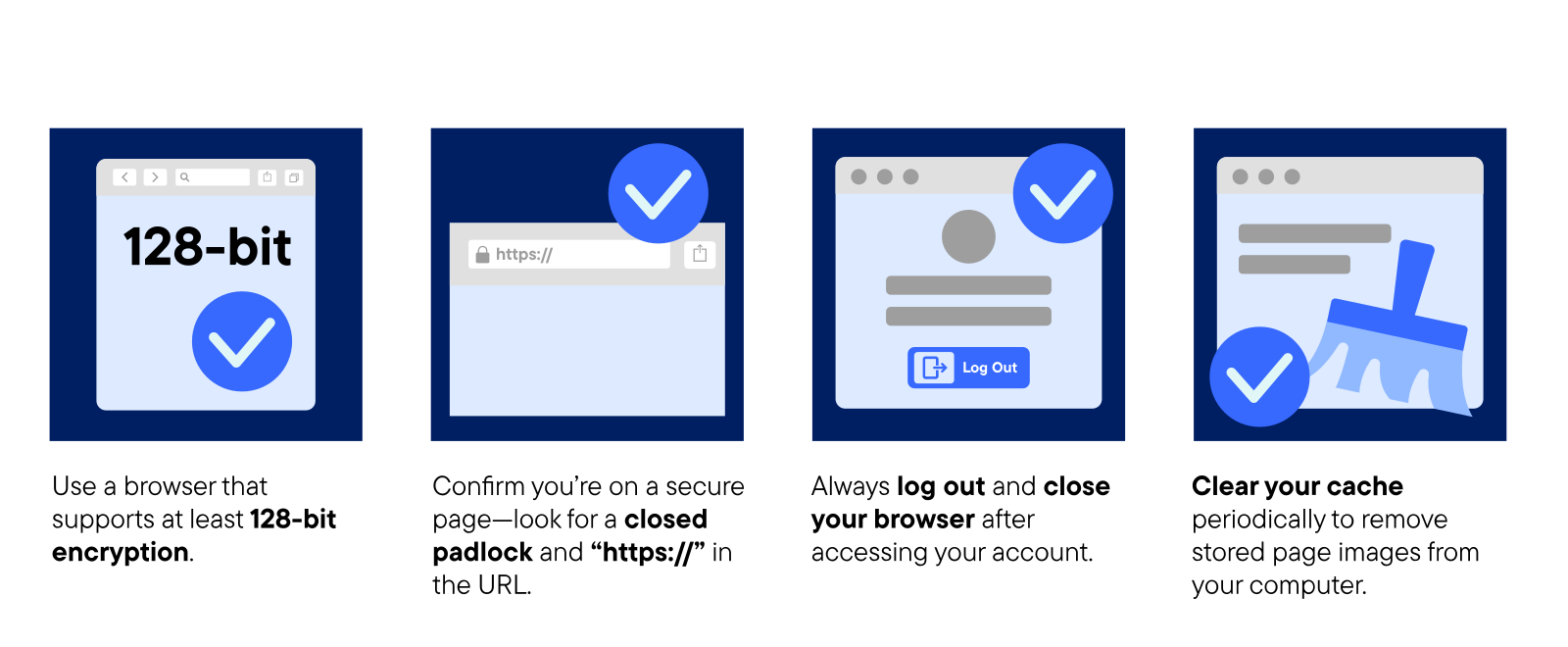
We continuously test and enhance our systems to protect your information. While no security framework is infallible, our integrated safeguards—and your vigilance—form a strong line of defence against online threats.
Beware of deepfakes and impersonation scams
AI tools can clone faces and voices, making fake videos, calls and messages look convincing. Impersonation is increasingly used to push bogus “investment opportunities” or to steer you to counterfeit sites.
What to watch for
Suspicious offers
Too good to be true offers, urgent deadlines or guaranteed returns.
Visual or audio oddities
Lip-sync mismatch, unnatural blinking, jumpy lighting, robotic tone or lag.
Unusual channels
Unsolicited DMs, WhatsApp/Telegram voice notes, or live video calls asking you to act immediately.
Account tells
New or lightly followed social profiles, misspelled handles, and posts that don’t match an executive’s usual content.
Our stance
We do not ask for confidential details or payments through social media, messaging apps, or video calls. Before engaging, always verify any approach via our official website and published contact details.
If something feels off
What to do if you suspect fraud
Speed matters. Follow these steps to limit risk and help investigations:
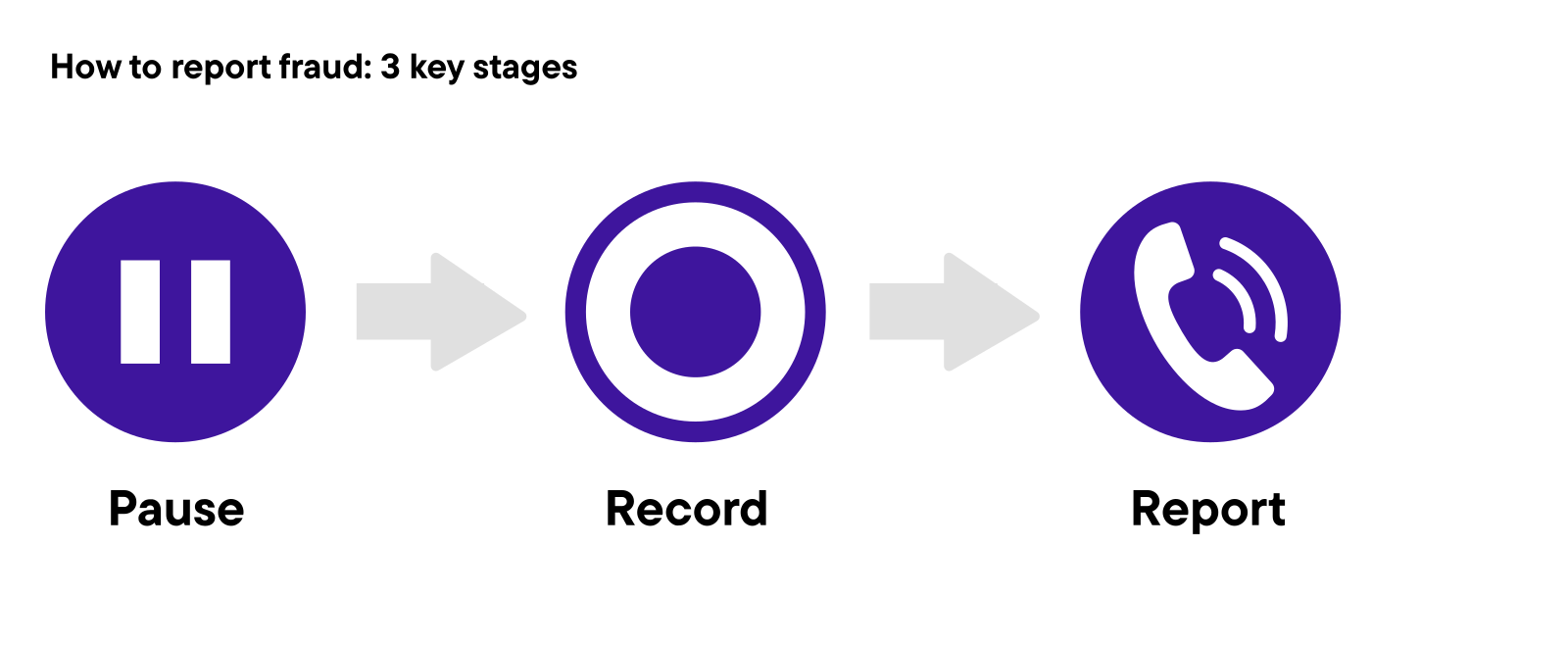
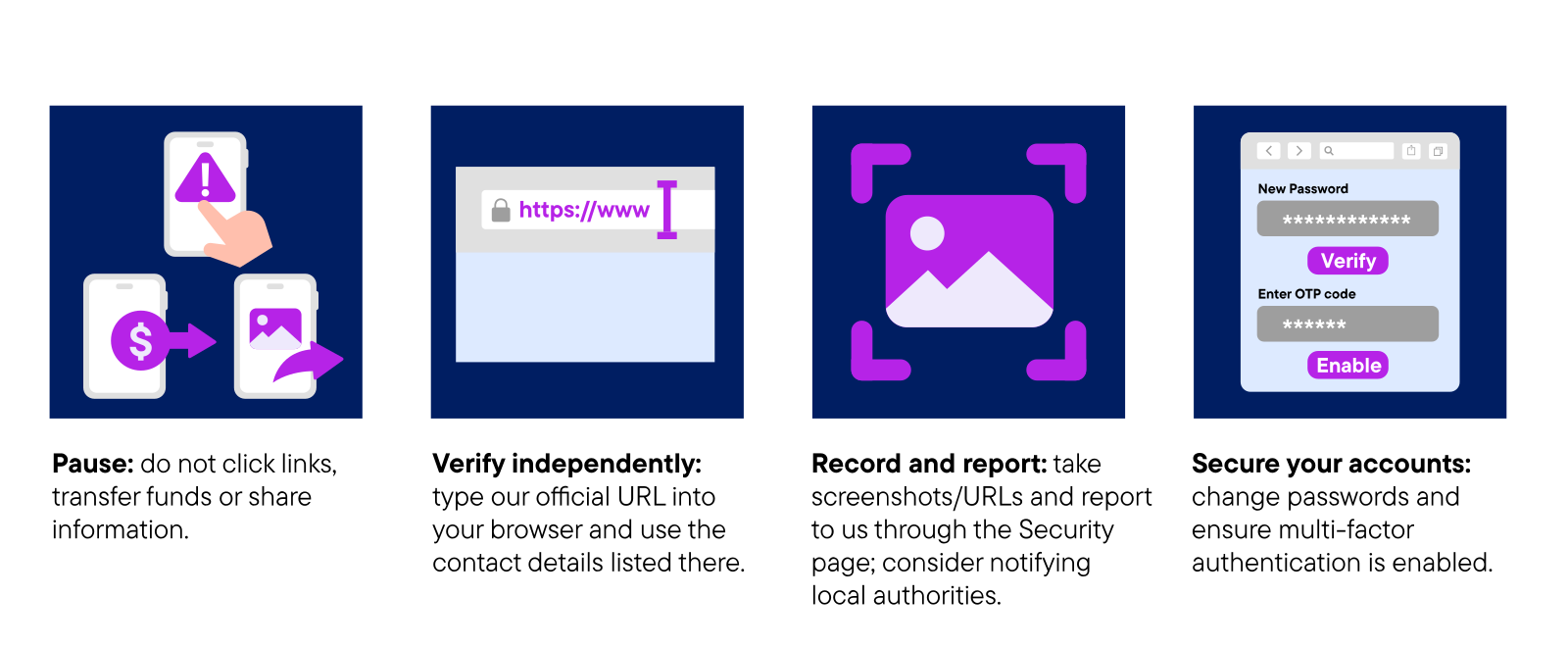
- Stop contact immediately. Do not reply, pick up follow-up calls, or continue chats.
- Do not click or pay. Avoid links, attachments, software installs, QR codes and any transfer of funds.
- Capture evidence. Take screenshots, note dates/times, save email headers and copy full URLs.
- Verify independently. Go to our official site by typing the address into your browser and contact Franklin Templeton using the details published there—not those in the suspicious message.
- Report it. Notify us through our Security page and report the incident to your local law-enforcement or relevant regulator.
- Secure your accounts and devices. Change passwords (use unique, strong passphrases), ensure MFA is enabled, and run an antivirus/anti-malware scan.
- If money or data was shared: Contact your payment provider or card issuer as soon as possible to request a hold or recall, and monitor statements for unauthorised activity.
Stay informed, stay protected
Fraud prevention starts with awareness. By staying alert to phishing, fake websites, malicious software, deepfakes and other tactics, you strengthen the first line of defence against scams.
Franklin Templeton remains committed to protecting investors through secure platforms and clear communication. If you ever have doubts about the authenticity of a message, website or individual claiming to represent us, always verify through our official website and published contact details. Together, we can build a safer digital environment for every investor.
Bookmark this page and share it with family and friends.